ENG: Astronomers captured an exceptionally rare view of a star exploding almost from the moment the event began. On March 21, 2026, the Einstein Probe detected a brief pulse of soft X-rays from a galaxy about 500 million light-years away. The signal, known as EP260321a, was identified as a “shock breakout,” the first flash produced when the shock wave from a collapsing star reaches its surface and releases radiation into space. Less than an hour later, telescopes on Earth observed the supernova, named SN 2026gzf, rapidly becoming brighter.
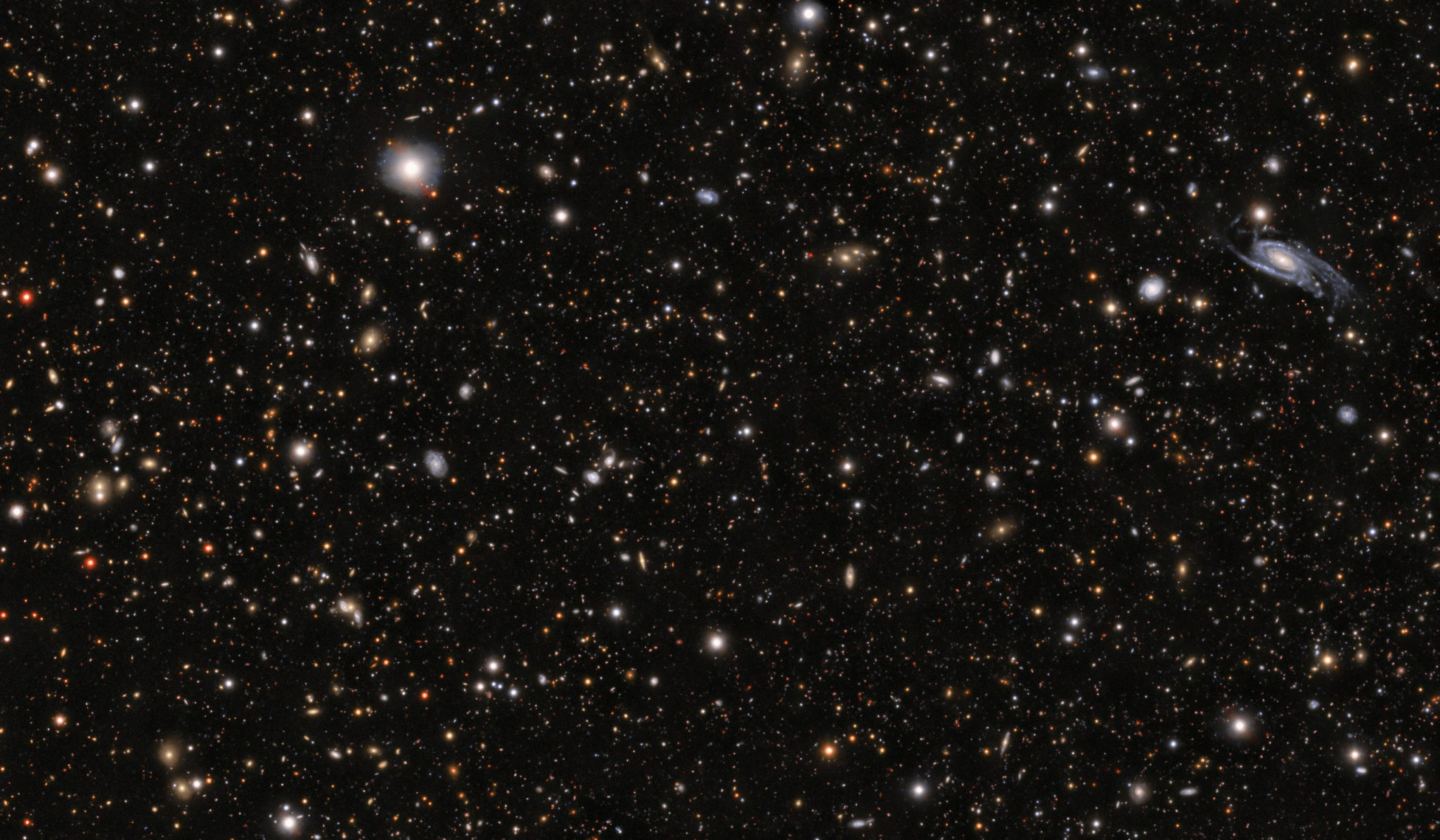
Scientists classified SN 2026gzf as a broad-lined Type Ic supernova, an energetic type of explosion produced by a massive star that has already lost its outer hydrogen and helium layers. These supernovae are sometimes connected with gamma-ray bursts and powerful jets traveling close to the speed of light. However, astronomers detected no gamma-ray burst, relativistic jet, or afterglow from SN 2026gzf. Researchers suggested that the star may have produced a “choked” jet that formed inside the star but failed to escape through its surface or the surrounding material.
Observations also revealed important details about the star before it exploded. Scientists concluded that the progenitor was a Wolf-Rayet star originally about 20 times the mass of the Sun. Before its death, the star experienced violent episodes of mass loss that stripped away its hydrogen and helium and created shells of material around it. By studying how the explosion interacted with this surrounding debris, astronomers were able to reconstruct part of the star’s final stages of life. The discovery demonstrates how rapid alerts and coordinated observations from telescopes around the world can give scientists an unprecedented view of the earliest moments of a supernova.
RO: Astronomii au surprins o imagine extrem de rară a exploziei unei stele aproape chiar din momentul în care evenimentul a început. Pe 21 martie 2026, sonda Einstein Probe a detectat un scurt impuls de raze X moi provenit dintr-o galaxie aflată la aproximativ 500 de milioane de ani-lumină. Semnalul, cunoscut sub numele de EP260321a, a fost identificat drept un „shock breakout”, adică primul fulger produs atunci când unda de șoc a unei stele aflate în colaps ajunge la suprafața acesteia și eliberează radiații în spațiu. La mai puțin de o oră după aceea, telescoapele de pe Pământ au observat supernova, numită SN 2026gzf, devenind rapid mai strălucitoare.
Oamenii de știință au clasificat SN 2026gzf drept o supernovă de tip Ic cu linii spectrale largi, un tip de explozie foarte energetică produsă de o stea masivă care și-a pierdut deja straturile exterioare de hidrogen și heliu. Aceste supernove sunt uneori asociate cu explozii de raze gamma și cu jeturi puternice care se deplasează cu viteze apropiate de cea a luminii. Totuși, astronomii nu au detectat nicio explozie de raze gamma, niciun jet relativist și nicio emisie reziduală în cazul SN 2026gzf. Cercetătorii au sugerat că steaua ar fi putut produce un „jet sufocat”, care s-a format în interiorul stelei, dar nu a reușit să străpungă suprafața acesteia sau materia din jur.
Observațiile au oferit și informații importante despre stea înainte ca aceasta să explodeze. Oamenii de știință au concluzionat că steaua progenitoare era o stea Wolf-Rayet, care avea inițial o masă de aproximativ 20 de ori mai mare decât cea a Soarelui. Înainte de moarte, steaua a trecut prin episoade violente de pierdere de masă, care au îndepărtat hidrogenul și heliul și au creat în jurul ei învelișuri de materie. Studiind modul în care explozia a interacționat cu aceste resturi, astronomii au reușit să reconstruiască o parte din ultimele etape ale vieții stelei. Descoperirea arată cum alertele rapide și observațiile coordonate ale telescoapelor din întreaga lume le pot oferi oamenilor de știință o perspectivă fără precedent asupra primelor momente ale unei supernove.
Source (NSF NOIRLAB, SciTechDaily, “Astronomers Caught a Star Exploding Almost the Instant It Began”, 13.08.2026)
Papers:
260321a/SN 2026gzf: The Faintest Shock Breakout Associated with a Broad-lined Supernova” by Brendan O’Connor, Xander J. Hall, Malte Busmann, Daniel Gruen, Alberto Floris, Tomás Cabrera, Ziyuan Zhu, Antonella Palmese, Dylan Green, John Banovetz, Julius Gassert, Christopher L. Fryer, Roberto Ricci, Eleonora Troja, Surya Shivaprasad, Gregory R. Zeimann, Ariel J. Amsellem, Stephen Bailey, Segev BenZvi, Simone Dichiara, Hendrik van Eerte
Rastinejad, J.C., Srinivasaragavan, G., Sarin, N., O’Dwyer, T., Cenko, S.B., Leung, J.K., Nugent, A.E., Perley, D.A., Schroeder, G., Anand, S. and Ahumada, T., 2026. A Multiwavelength View of the First Type Ic-BL Supernova with an Einstein Probe X-Ray Shock Breakout. The Astrophysical Journal Letters, 1007(1), p.L9.
