ENG: Two PhD students from Sydney have achieved a remarkable milestone in space science by using artificial intelligence to restore the James Webb Space Telescope’s sharp vision from Earth. Louis Desdoigts and Max Charles developed a software system called AMIGO (Aperture Masking Interferometry Generative Observations) that corrected image blurring in the telescope’s infrared camera, eliminating the need for a physical repair mission. Their work builds on the Australian-designed Aperture Masking Interferometer, created by Professor Peter Tuthill, which allows astronomers to capture ultra-high-resolution images of stars and exoplanets through interferometry.
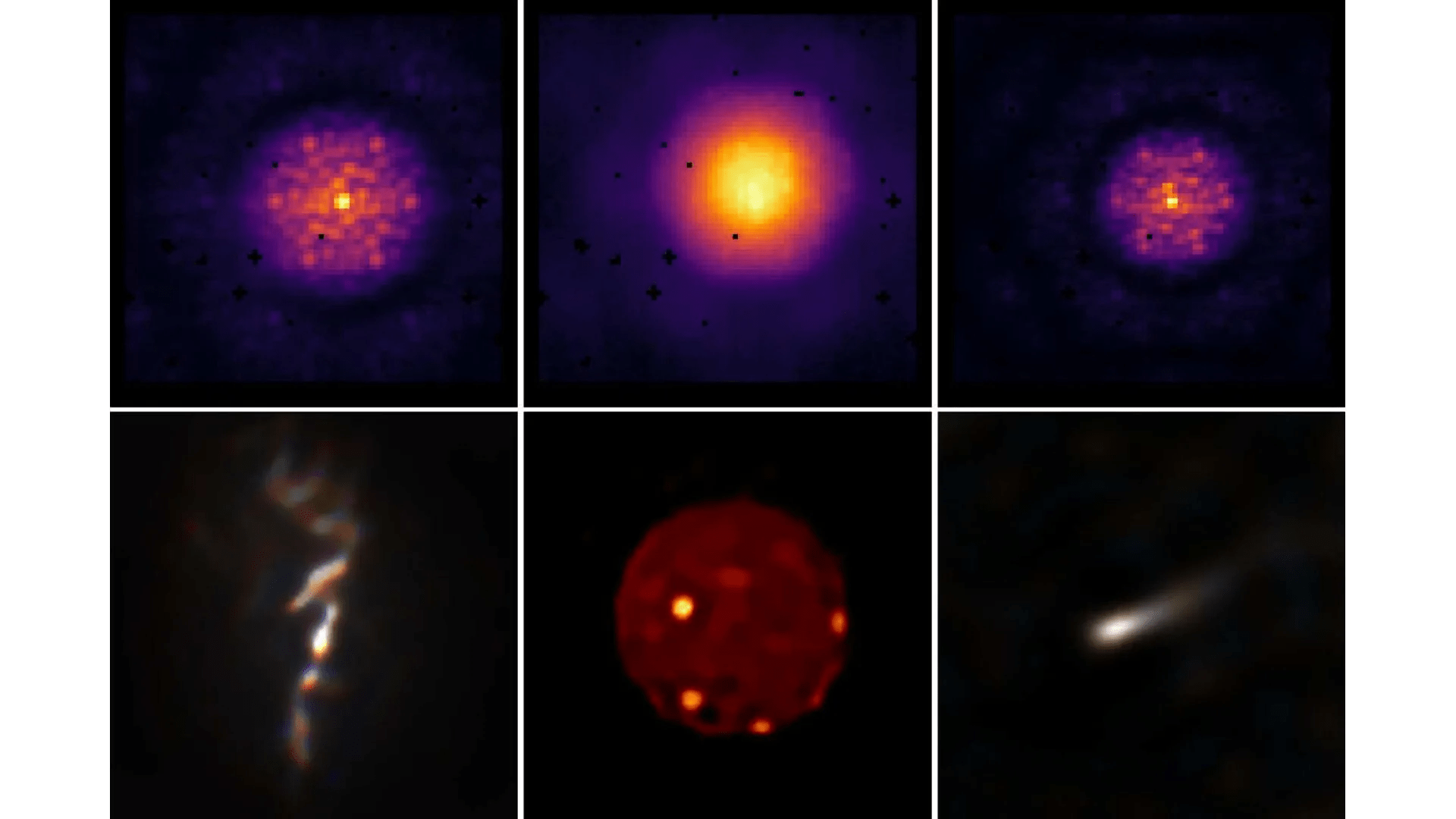
AMIGO uses advanced simulations and neural networks to model how the telescope’s optics and electronics function in space. The software identifies and corrects a problem known as the brighter-fatter effect, where electrical charge slightly spreads between neighboring pixels. By digitally compensating for this distortion, the system restored the telescope’s original imaging precision. Professor Tuthill described the innovation as a powerful demonstration of how modern coding and artificial intelligence can achieve what once required astronaut intervention.
With AMIGO now integrated, the James Webb Space Telescope is producing its sharpest images to date. The improved clarity has enabled the observation of faint celestial bodies, including an exoplanet and a brown dwarf orbiting the star HD 206893. It has also enhanced images of a black hole jet, Jupiter’s moon Io, and the Wolf-Rayet star WR 137. Dr. Desdoigts emphasized that the success of AMIGO not only extends the telescope’s scientific reach but also showcases the potential of AI-driven solutions in astronomy.
RO: Doi doctoranzi din Sydney au realizat o performanță remarcabilă în domeniul științei spațiale, folosind inteligența artificială pentru a restabili claritatea imaginilor obținute de Telescopul Spațial James Webb, fără a părăsi Pământul. Louis Desdoigts și Max Charles au dezvoltat un sistem software numit AMIGO (Aperture Masking Interferometry Generative Observations), care a corectat estomparea imaginilor din camera infraroșie a telescopului, eliminând necesitatea unei misiuni fizice de reparație. Lucrarea lor se bazează pe componenta australiană a telescopului, Interferometrul cu Masca de Apertură, creat de profesorul Peter Tuthill, care permite astronomilor să capteze imagini de înaltă rezoluție ale stelelor și exoplanetelor prin interferometrie.
AMIGO utilizează simulări avansate și rețele neuronale pentru a modela modul în care funcționează optica și electronica telescopului în spațiu. Software-ul identifică și corectează un fenomen numit efectul „mai strălucitor-mai difuz”, prin care sarcina electrică se răspândește ușor între pixeli vecini. Prin compensarea digitală a acestei distorsiuni, sistemul a restabilit precizia inițială a imaginilor telescopului. Profesorul Tuthill a descris această inovație ca pe o dovadă puternică a modului în care programarea modernă și inteligența artificială pot realiza ceea ce odinioară necesita intervenția astronauților.
Odată cu integrarea AMIGO, Telescopul Spațial James Webb produce acum cele mai clare imagini de până acum. Claritatea îmbunătățită a permis observarea unor corpuri cerești slabe, inclusiv a unei exoplanete și a unei pitice brune care orbitează steaua HD 206893. De asemenea, au fost obținute imagini mai detaliate ale unui jet de gaură neagră, ale lunii Io a lui Jupiter și ale stelei Wolf-Rayet 137. Dr. Desdoigts a subliniat că succesul AMIGO nu doar extinde capacitatea științifică a telescopului, ci demonstrează și potențialul soluțiilor bazate pe inteligență artificială în astronomie.
Source (ScienceDaily, “AI restores James Webb telescope’s crystal-clear vision”, 27.10.2025)
Paper: Desdoigts, L., Pope, B., Charles, M., Tuthill, P., Blakely, D., Johnstone, D., Ray, S., Sivaramakrishnan, A., Kammerer, J., Thatte, D. and Cooper, R., 2025. AMIGO: a Data-Driven Calibration of the JWST Interferometer. arXiv preprint arXiv:2510.09806.
